Which Best Describes Cultural Differences in Attachment Styles
However the value of cross cultural research as a natural experiment could be undermined by globalisation. Secure anxious preoccupied dismissive avoidant and fearful avoidant.

Dr Caroline Leaf S Instagram Profile Post This Is Super Helpful Thank You Thebraincoach For This Great Graphic I Am Statements Emotions Caroline Leaf
Precisely because adult attachment styles are so consequential for mating and parenting evolutionary considerations suggest that.

. Six dimensions of culture can be identified. FindingsIt was found that secure attachment was the most common type of attachment in all cultures. Sort them into positive and negative.
The Covariation Model of Attribution. When the baby is 4 months old it is sent to another nursery where it is reared as a. Culture 1 is shared by the members of the group 2 is passed on from older members to younger members and 3 shapes our view of the world.
This ar ticle proposes to reconceptualize attachment theor y as. Anxious-preoccupied attachments can create relationships that thrive on drama or are generally lower in trust. Secure avoidant and ambivalent in each country.
Fundamental cultural differences in how social competence is construed thus challenging the universality of the com- petence hypothesis. The Self in a Social Context. According to attachment theory when a child is in constant distress negative attachment styles are formed based on their fears.
Preoccupied adults hold a negative self-image and a positive image of others meaning that they have a sense of unworthiness but generally evaluated others positively. Go to Social Cognition Perception. A preoccupied attachment style is demonstrated by adults who are overly concerned with the uncertainty of a relationship.
Secure attachment tends to lead to stable fulfilling relationships. Adult attachment styles develop along two dimensions. Memorize flashcards and build a practice test to quiz yourself before your exam.
Cultural differences in attachment. Attachment styles among young children are affected by the level of distress. Attachment theory went against the conventional behavioral belief that attachment formed as a response to a childs physical needs eg food by examining the caregivers emotional emphasis.
Start studying the Chapter 5 flashcards containing study terms like Having secure attachments in infancy Answers. Differences in attachment have different fitness costs and benefits for males and females costs and benefits that may partially shift depending on ecological and social factors see 8 1011. The secure base hypothesis.
Since Japan and Korea have quite similar child rearing styles this similarity might be explained in terms of child-rearing styles. Individualistic cultures emphasize self-sufficiency while. Cultural Differences in Attributional Patterns 511.
However when used cross-culturally there are even more ethical issues because children in some cultures will. For example in Israel 4 day old babies are placed in a kibbutz and the parents visit for 3 hours a day. When the parent or another attachment figure is away anxiety can occur.
Definition Steps 646. Outline and evaluate research into cultural variations in attachment 16 marks through different cultures there are different methods of child rearing which can lead to different attachment styles. Future research needs to attend to child effects cultural normativeness and construals of parenting as well as how culture moderates each.
The Kroonenberg study showed that in a study of 8 countries the culture attachments patterns seem to be quite similar. Attachment refers to a deep and enduring emotional bond that connects one person to another across time and spaceFor example some of the greatest sources of joy involve falling in love starting a family being reunited with distant loved. In western countries the dominant attachment.
Ouline the procedure of Van Ijzendoorn and Kroonenberg 1988 Meta- analysis of 32 studies carried out in 8 different countries using the Strange Situation. A secure attachment style is low in both anxiety and avoidance. There are ethical issues in the Strange Situation anyway because it stresses the children.
The lowest percentage of secure attachments was shown in China and the highest in Great Britain. Important cultural and sub cultural differences in attachment Grossman and Grossman - 1991. Discuss cultural variations in attachments.
Attachment-related anxiety and attachment-related avoidance. For example because secure attachment is the most common pattern and mothers are the most common attachment figure despite variations in child rearing practices these patterns could suggests biological predispositions as Bowlby said. Mary Ainsworths strange Situation.
Secure attachment seems to be the norm in a wide range of cultures supporting Bowlbys idea that attachment is innate and universal and this type is the universal norm. Cultural differences in attachment AS. One of the most widely debated issues in parenting is whether and to what extent a childs individuality should be nurtured.
1 how people see themselves 2 how people see nature 3 how people approach interpersonal relationships 4 how people view activity and achievement. Attachment Some of the most rewarding experiences in peoples lives involve the development and maintenance of close relationships. What is the most common methodology used to research how babies vary between cultures.
The most common attachment type was a secure attachment. Reflects american customs and values with regards to the best child. Results showed that individualistic countries that supp.
Read the following criticisms. An anxious-preoccupied attachment style is high in anxiety and low in avoidance. First we briefly describe attachment theory and three core hypotheses that attachment theorists assume are universal Bowlby 1973.
Describe and evaluate cultural. Most german infants insecurely attached. Using a meta analysis statistical technique they calculated the average percentage for the different attachment styles eg.
The Four Adult Attachment Styles. They investigated attachment in infancy but the research has since been extended to attachment in adulthood. Learn vocabulary terms and more with flashcards games and other study tools.
Start studying Cultural variations in Attachment. Describe two cross-cultural differences evident in the above table. There are four adult attachment styles.
A culture is a group of people who have their own norms values and customs. There are two fundamental patterns in child-rearing individualistic and collectivist explains communication expert Marcia Carteret on Dimensions of Culture. May help children to recover from periods of inadequate functioning later in childhood C.
The found that secure attachment was the most common type of attachment in all cultures. Virtually guarantees positive adjustment later in life B. Parenting styles that are congruent with cultural norms appear to be effective in transmitting values from parents to children perhaps because parenting practices that approach the cultural norm result in.

Pin On Student Affairs Programs Ideas Activities

Cross Cultural Communication Professional Communications
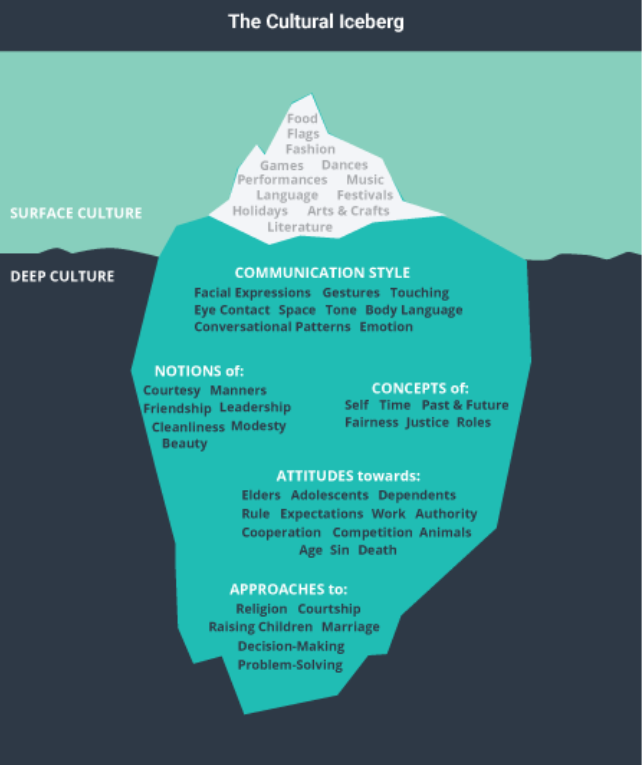
Cross Cultural Communication Professional Communications
Positive Parenting Is A Method Of Parenting That Uses Guidance And Discipline In A Positive Way Parenting Infographic Parenting Skills Positive Parenting
No comments for "Which Best Describes Cultural Differences in Attachment Styles"
Post a Comment